Low-Resource Language Evaluations
Do frontier AI models actually understand underrepresented languages?
Overview
As an AI orchestration platform focused on global impact, Gooey.AI - with the support of the Gates Foundation - actively aggregates and evaluates the latest private and open source AI models to assess their understanding of digitally underrepresented languages.
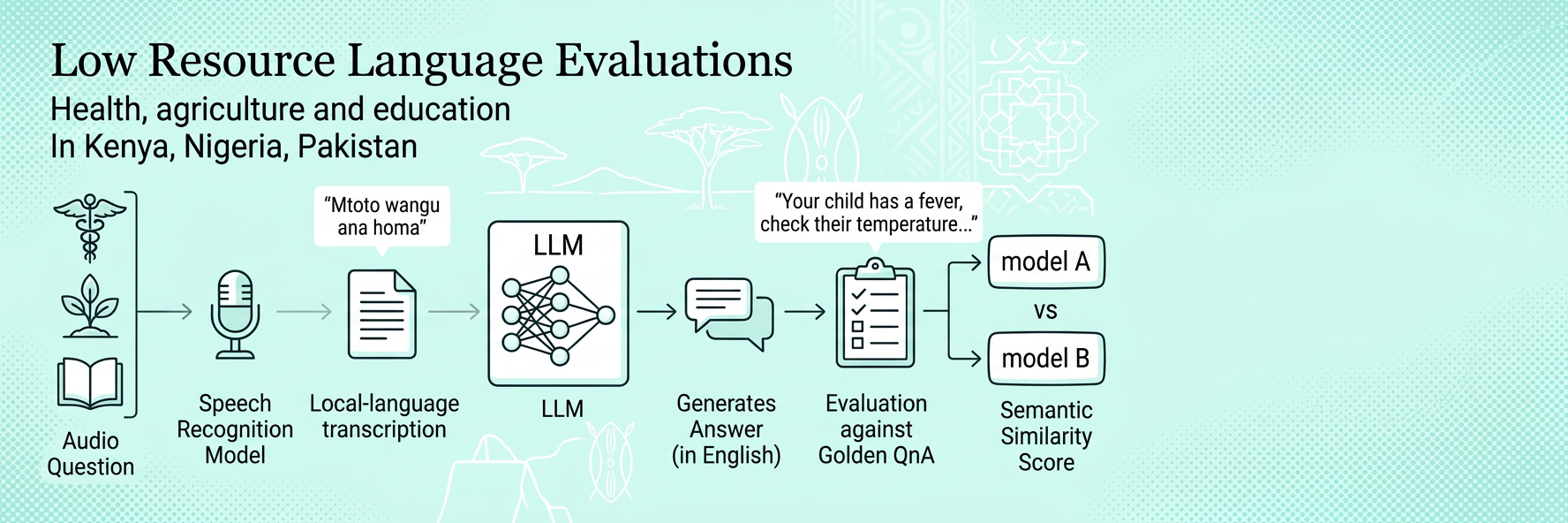
Our goal is to highlight real-world use cases of common health, agriculture and education audio questions and determine how well and how quickly different AI model combinations respond to these questions (as determined by their semantic similarity to expert provided “golden” answers).
Every evaluation, prompt, model settings and AI workflows are public and immediately forkable for organizations to test AI any workflow with your own data and use case. Organizations are encouraged to create audio evaluations with their own data too.
Partners


Health Evaluations
In April 2026 we evaluated private models (Gemini 3.1, OpenAI 5.4, Intron) and open-source / sovereign-deployable models (Omnilingual, Gemma 4 26B, Kimi 2.5) on health audio questions in Pakistani and Nigerian languages. Gemini 3.1 Pro paired with Intron or Meta’s Omnilingual ASR was most accurate — a good fit for WhatsApp and async messaging, likely too slow for live voice services.
Pakistani languages
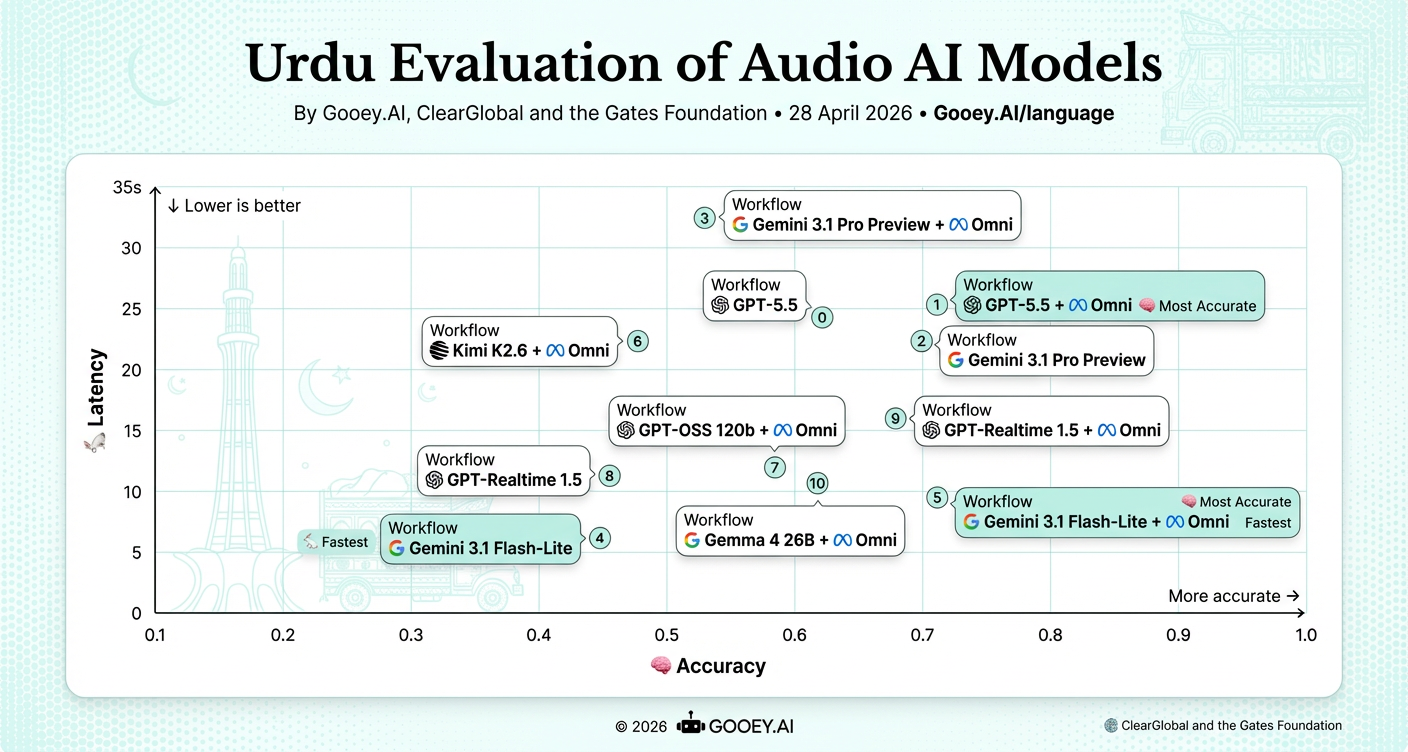
GPT-5.5 + Omni and Gemini 3.1 Flash-Lite + Omni both lead at ~0.7 accuracy. Flash-Lite + Omni is fastest of the top performers at ~9s. Gemini 3.1 Pro + Omni is accurate but slowest at ~32s, making it better suited to asynchronous use.
Urdu evaluation →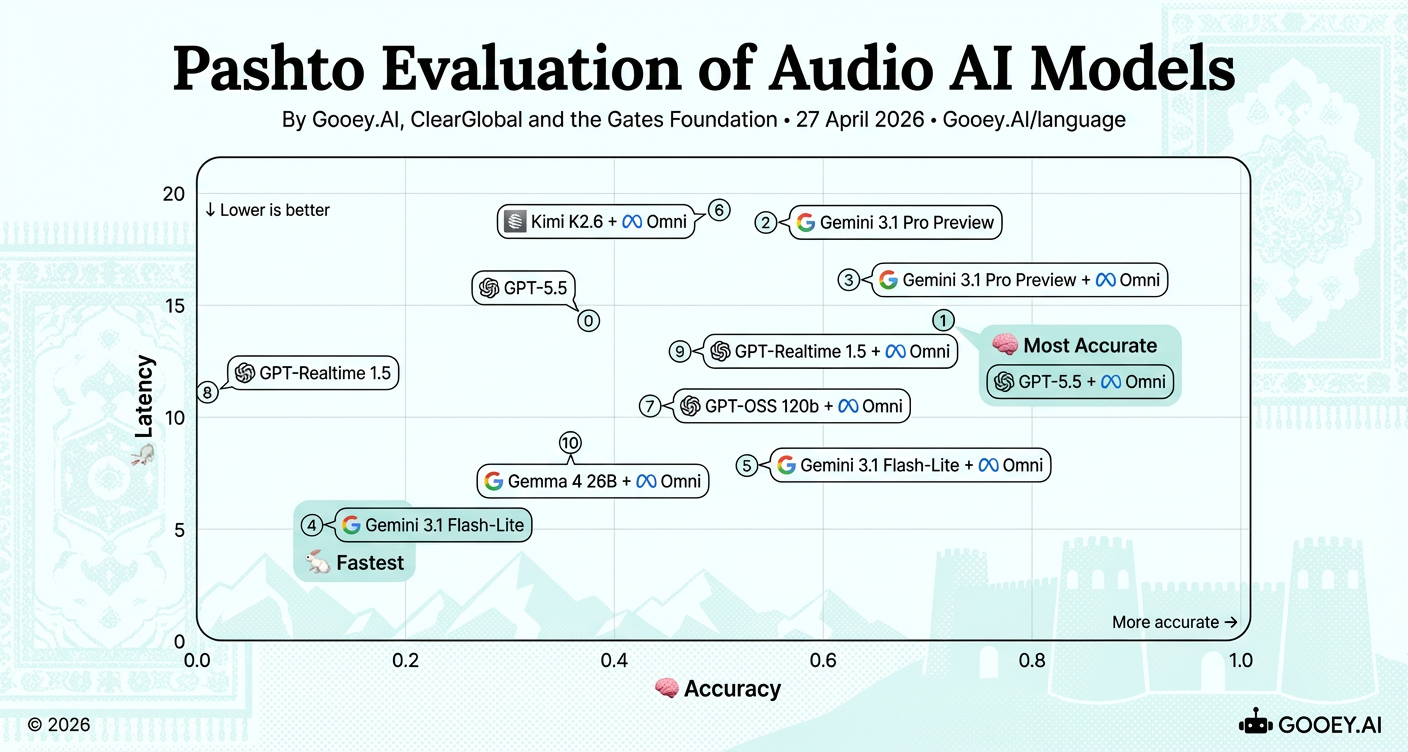
GPT-5.5 + Omni leads at ~0.71 accuracy and ~14s latency. Pashto scores lower overall than Urdu; Gemini 3.1 Flash-Lite + Omni is the practical real-time option, staying below ~8.5s with mid-range accuracy.
Pashto evaluation →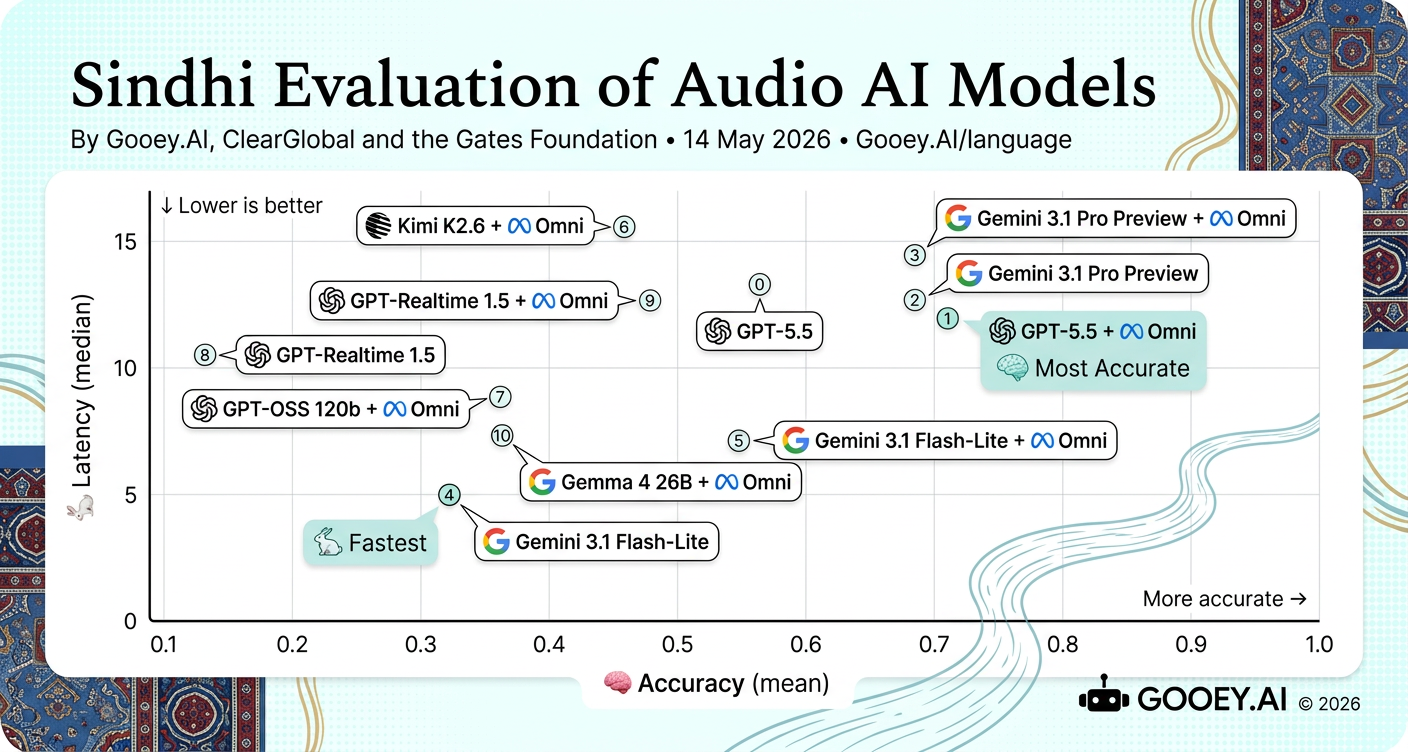
GPT-5.5 + Omni is most accurate at ~0.73 and ~12s, with Gemini 3.1 Pro variants close behind but slower. Flash-Lite + Omni again provides the practical speed–accuracy middle ground.
Sindhi evaluation →Nigerian languages
Gemini 3.1 Pro achieved the highest accuracy at 0.71 while maintaining lower latency than most configurations at ~16.3s. Claude Sonnet 5 + Omni was fastest at ~13.6s, but its accuracy was considerably lower at 0.5.
Hausa evaluation →Gemini 3.7 Flash + Omni achieved the highest accuracy while delivering nearly the lowest latency, making it the strongest overall configuration at 0.59 and ~15.5s. Claude Sonnet 5 + Omni was marginally faster, but its accuracy fell to 0.23.
Nigerian Fulfulde evaluation →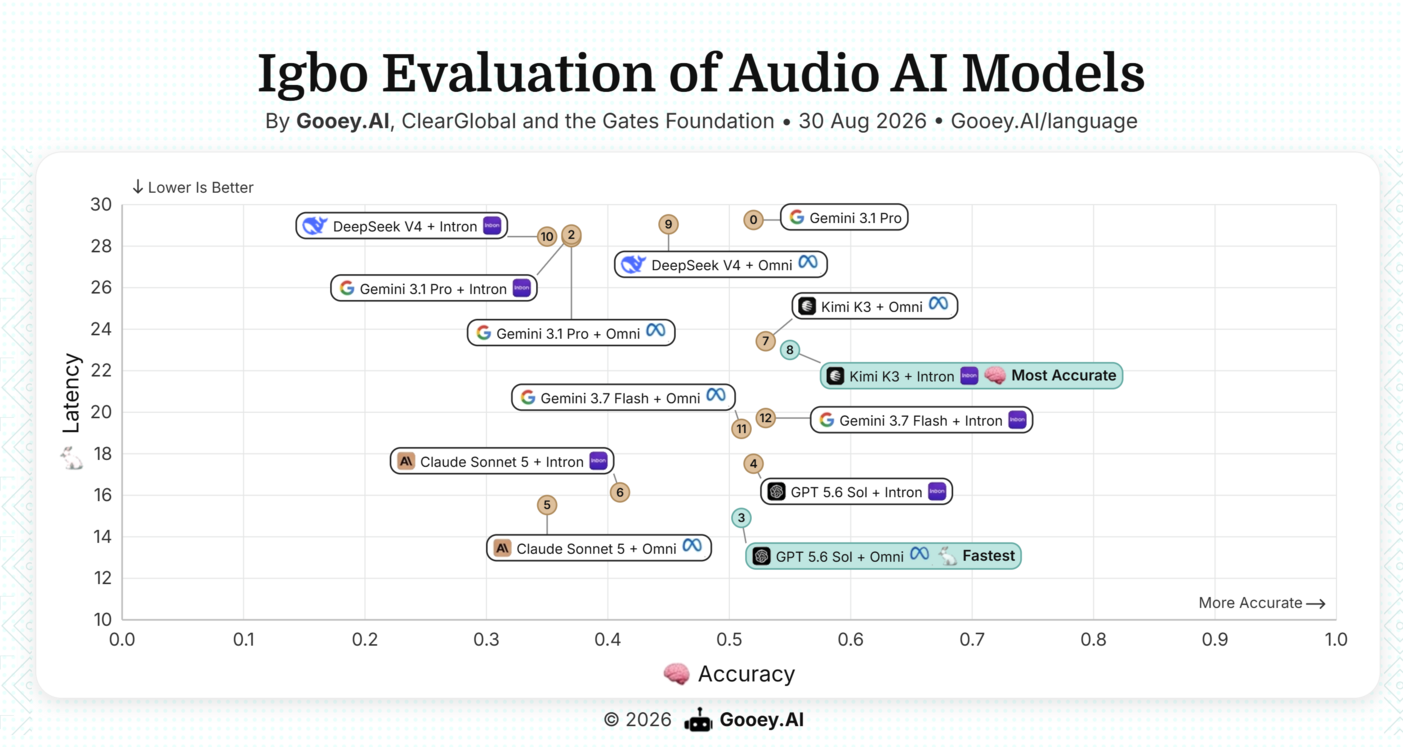
Kimi K3 + Intron achieved the highest accuracy at 0.55 and ~23s. GPT 5.6 Sol + Omni followed closely at 0.51 while delivering the lowest latency at ~14.9s, making it the strongest speed–accuracy trade-off.
Igbo evaluation →Gemini 3.1 Pro achieved the highest accuracy by a clear margin while maintaining moderate latency at 0.61 and ~17.2s. Claude Sonnet 5 + Omni was fastest at ~13.9s, but its accuracy was substantially lower at 0.27.
Yoruba evaluation →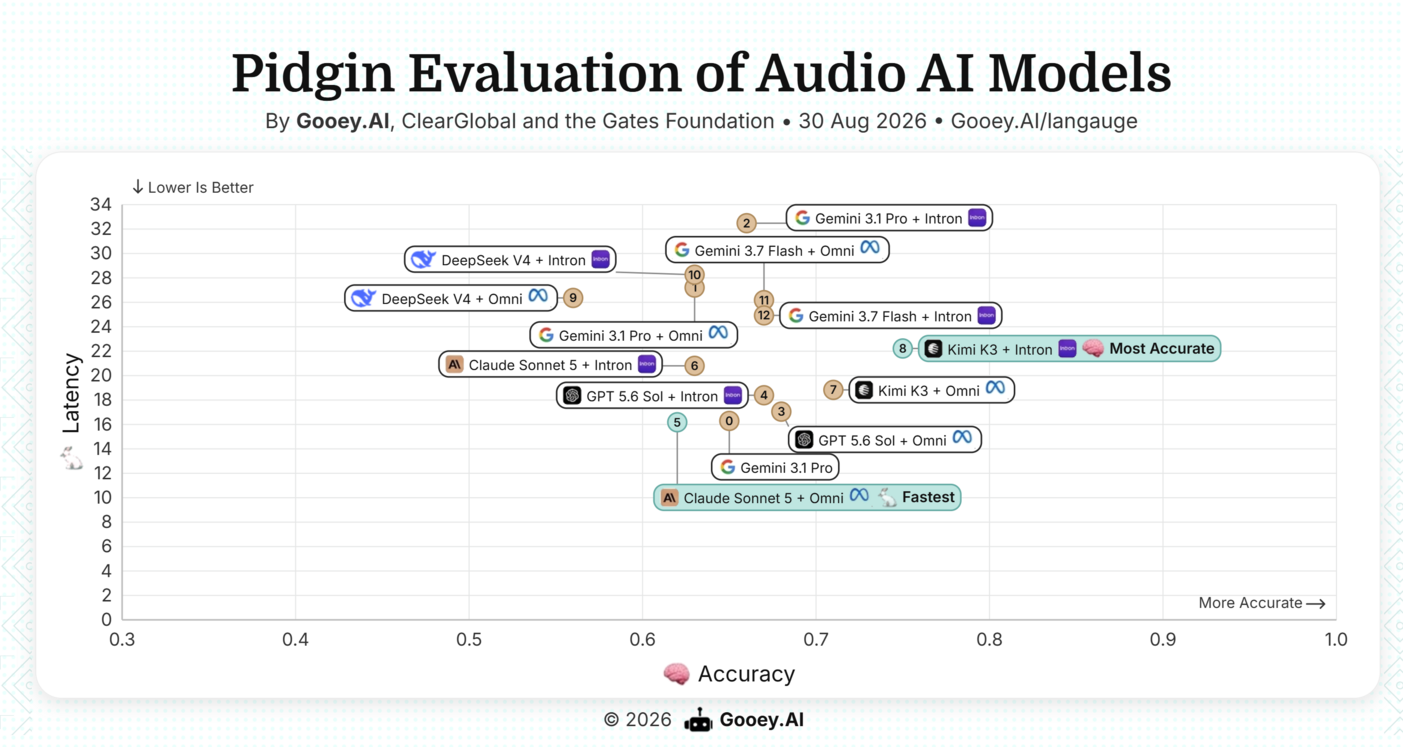
Kimi K3 + Intron achieved the highest accuracy at 0.75 and ~22.2s. Kimi K3 + Omni followed closely with lower latency at 0.71 and ~18.8s. Claude Sonnet 5 + Omni was fastest at ~16.2s with 0.62 accuracy.
Pidgin evaluation →Low-Resource Language AI Evaluations
December 2025 round: fine-tuned African ASR + modern LLMs (GPT-5.1, Gemini 3) hit 85–96% accuracy at 4–10s response times — fast enough for phone-based services. Voice AI for these languages is now viable for WhatsApp and basic phone deployments at scale.
Read the paper →East African languages
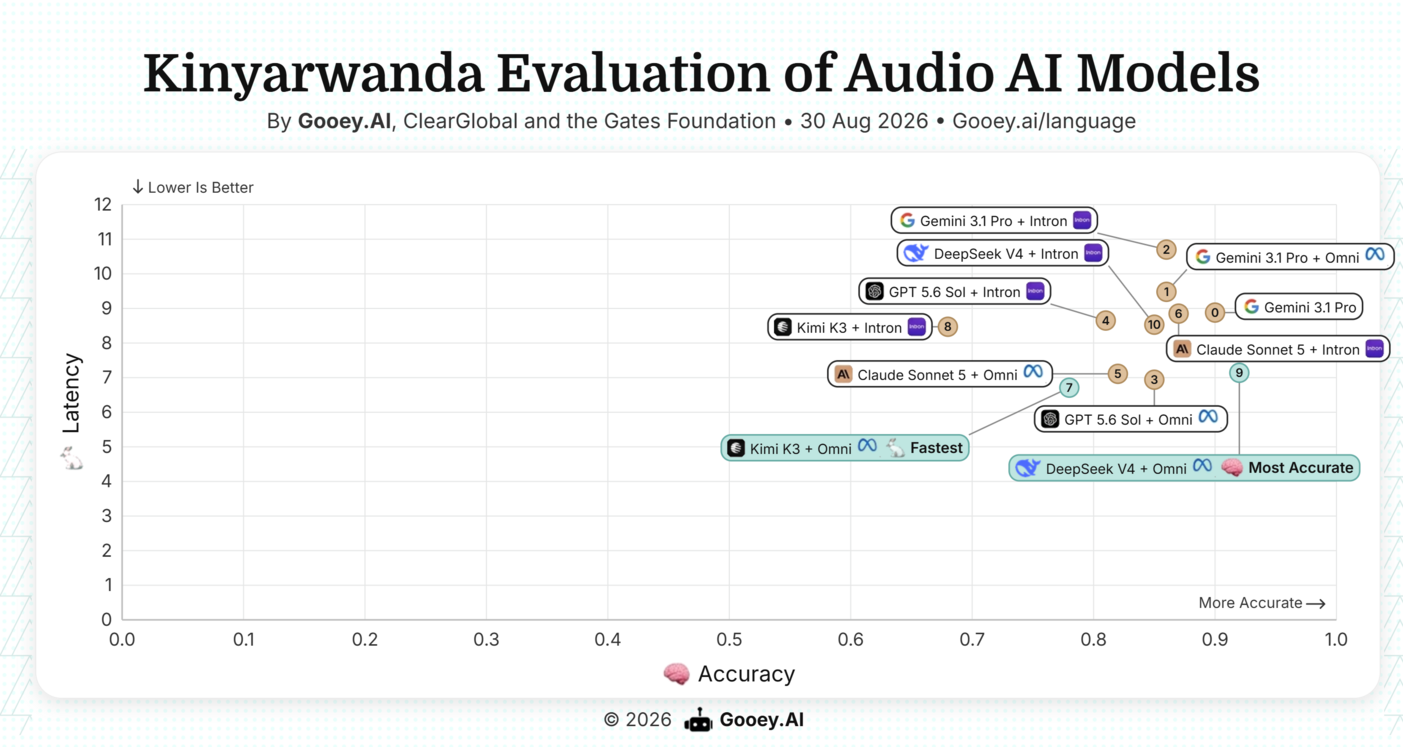
DeepSeek V4 + Omni achieved the highest accuracy while maintaining relatively low latency at 0.92 and ~7.1s. Kimi K3 + Omni was fastest at ~6.7s, but its accuracy was lower at 0.78.
Kinyarwanda evaluation →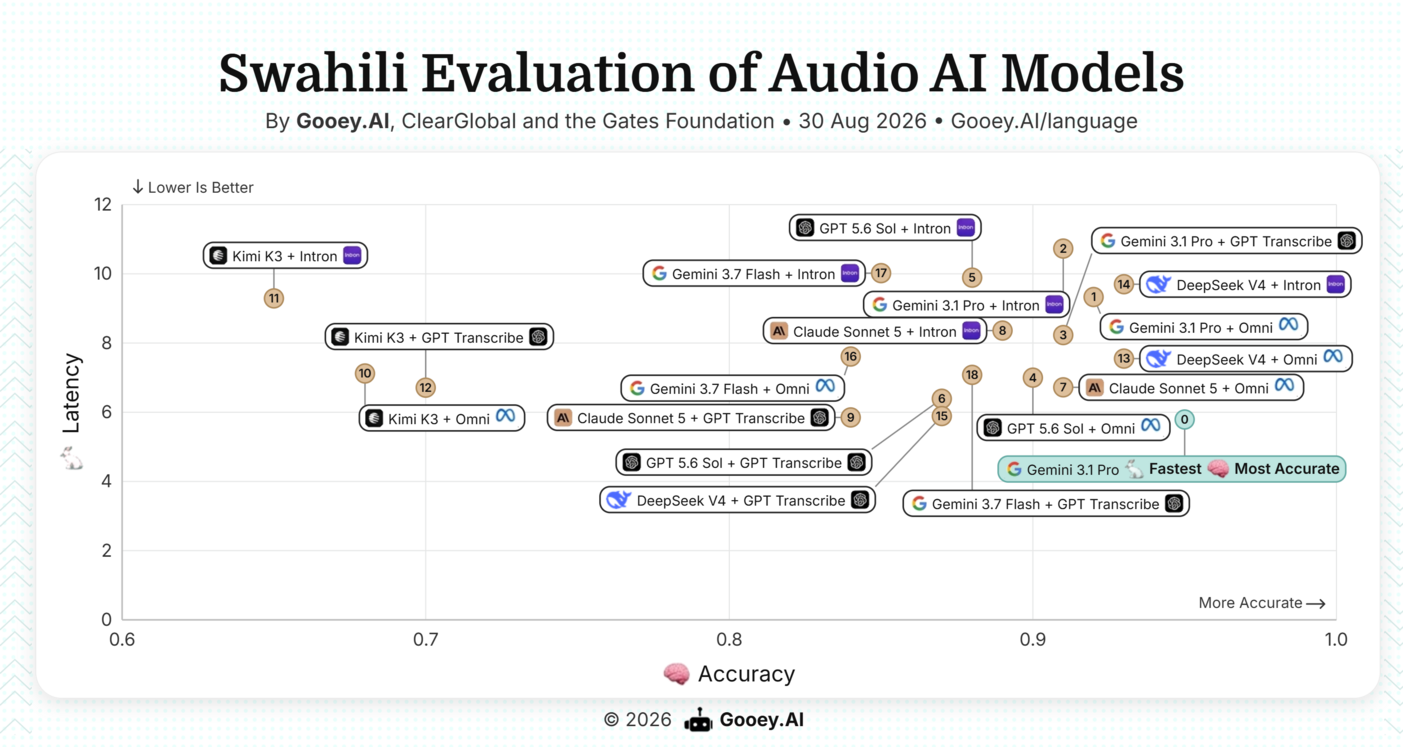
Gemini 3.1 Pro was the clear leader for Swahili, achieving both the highest semantic accuracy and lowest response latency at 0.95 and ~5.8s. It delivered the strongest speed–accuracy balance of every configuration tested.
Swahili evaluation →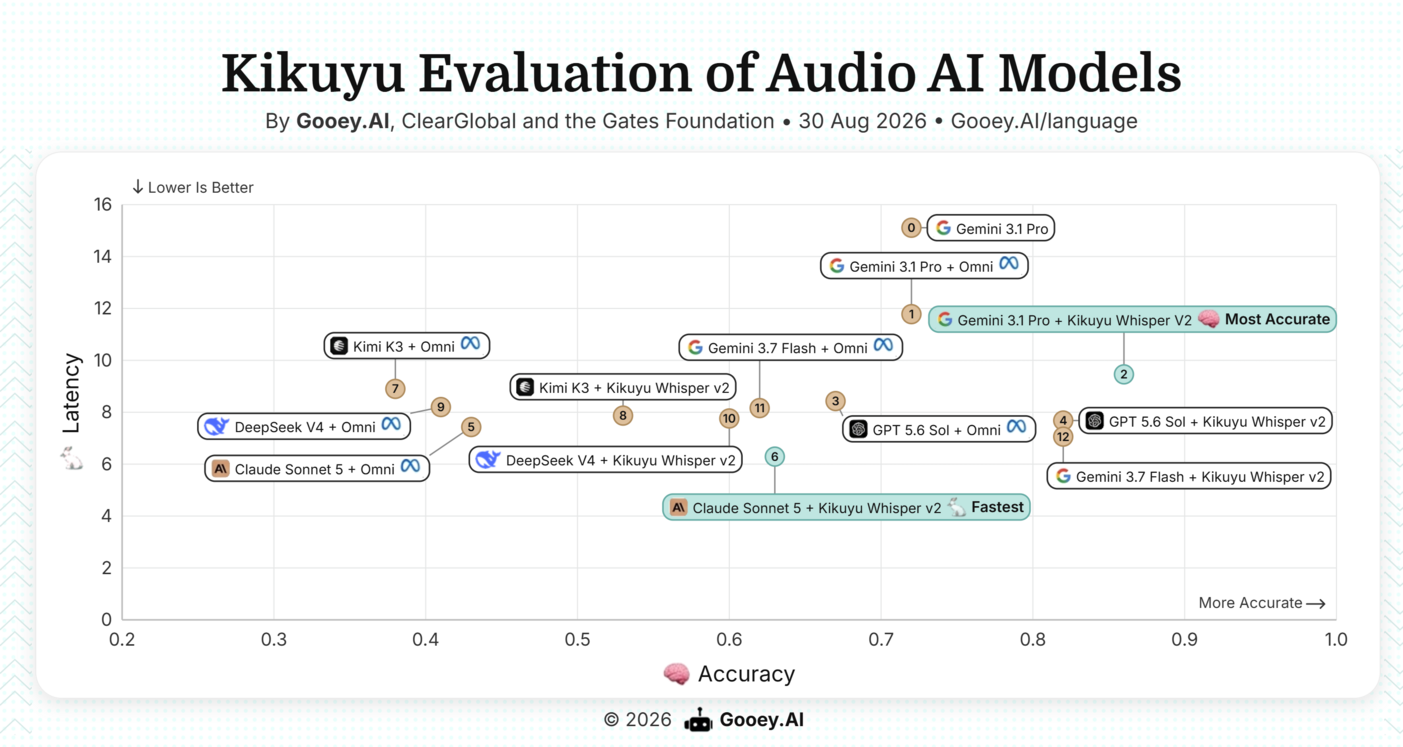
Gemini 3.1 Pro + Kikuyu Whisper v2 was most accurate at 0.86 and ~9.5s. Gemini 3.7 Flash + Whisper v2 offered a strong balance at 0.82 and ~7.1s, while Claude + Whisper v2 was fastest at 0.63 and ~6.3s.
Kikuyu evaluation →Theory of Change
 AI systems don’t understand local-language speech
The context
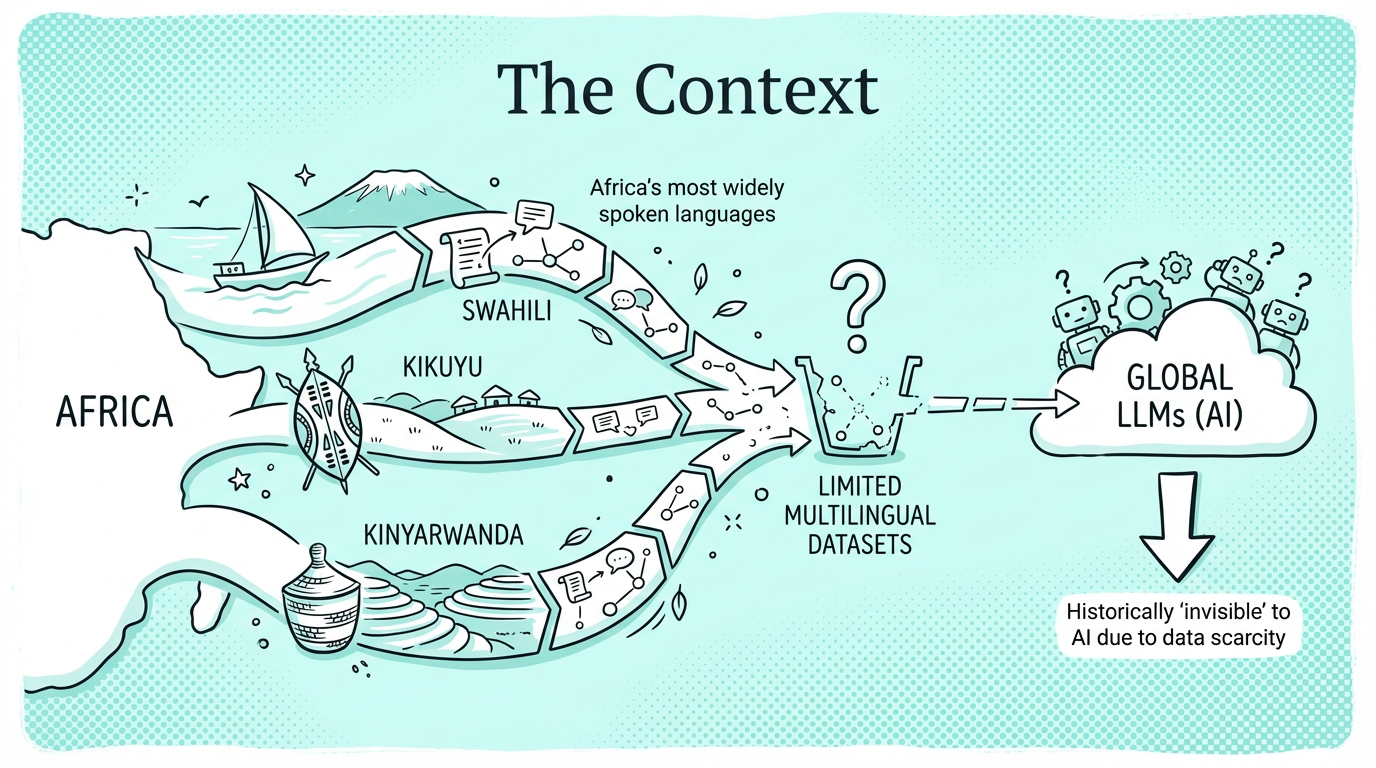
Many of Africa’s most widely spoken languages—such as Swahili, Kikuyu and Kinyarwanda—have historically been “invisible” to AI due to limited multilingual datasets used to train LLMs. This results in unequal access to AI and underrepresentation of people in underserved areas.
The ground reality
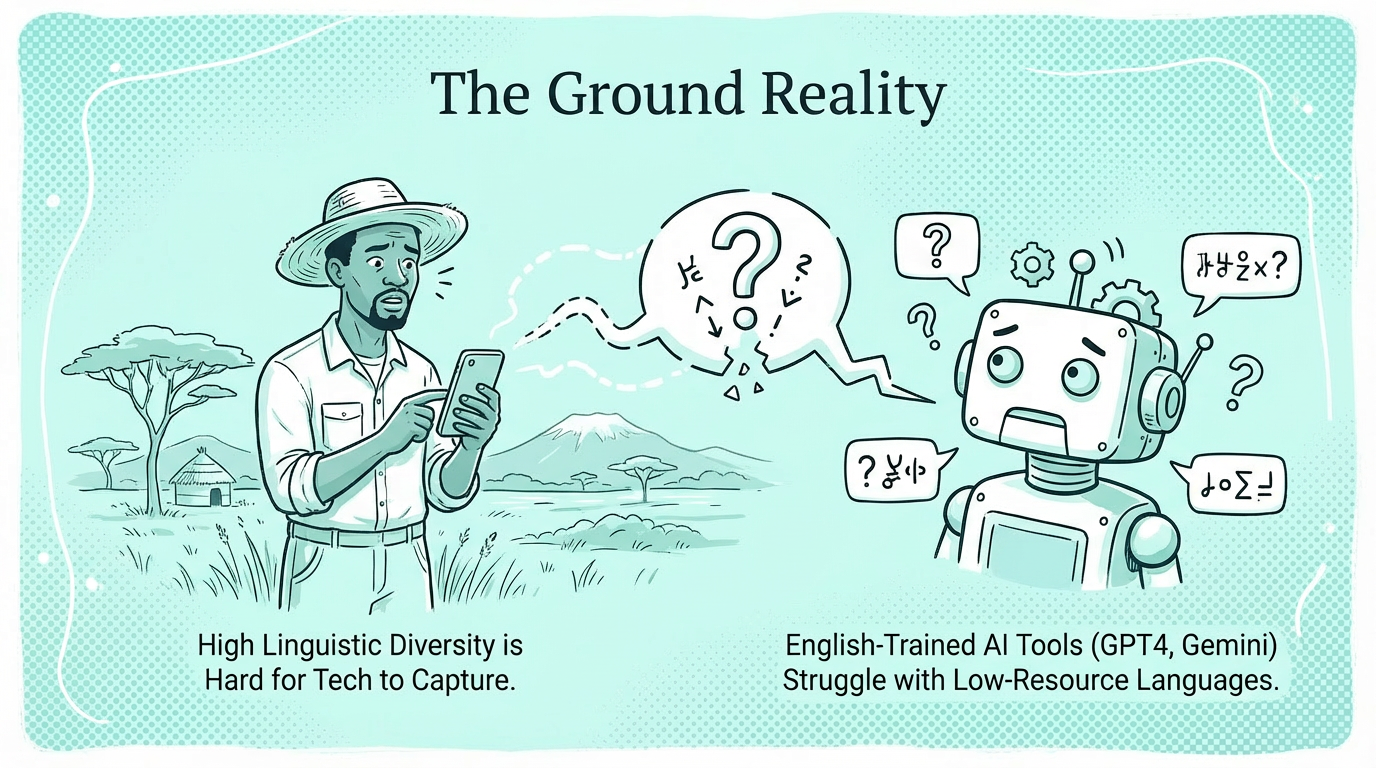
Unfortunately, capturing this diversity of language is hard for tech companies attempting to make speech recognition and translation models. This poor performance then implies that incredible tools like GPT4 and Gemini - which are primarily trained on English - don’t work particularly well for speakers of low-resource languages.
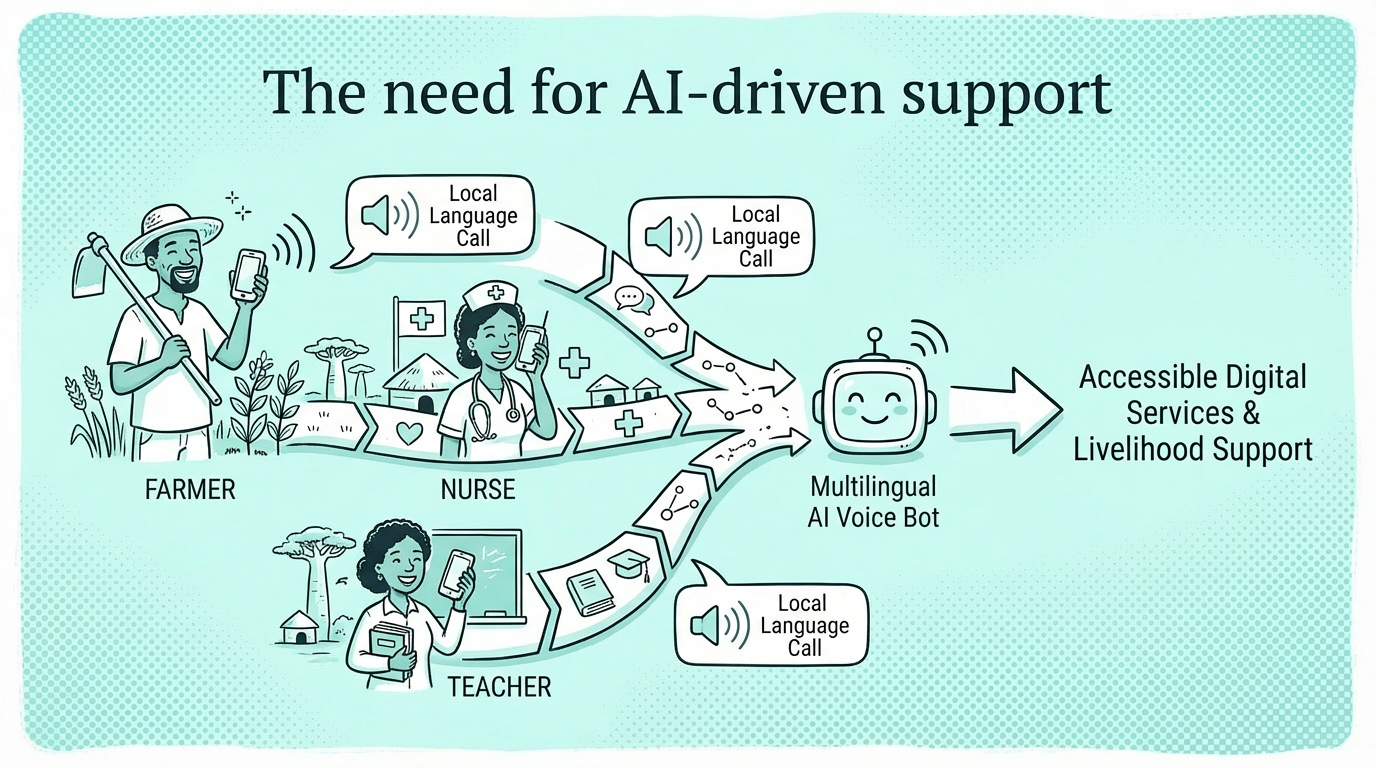
The need for AI-driven support
AI interventions such as small shareholder agriculture advisory show significant promise in aiding livelihood opportunities in the Global South. Everyone regardless of their language or location should be able to access digital services through voice, not text.
 Interventions and Process
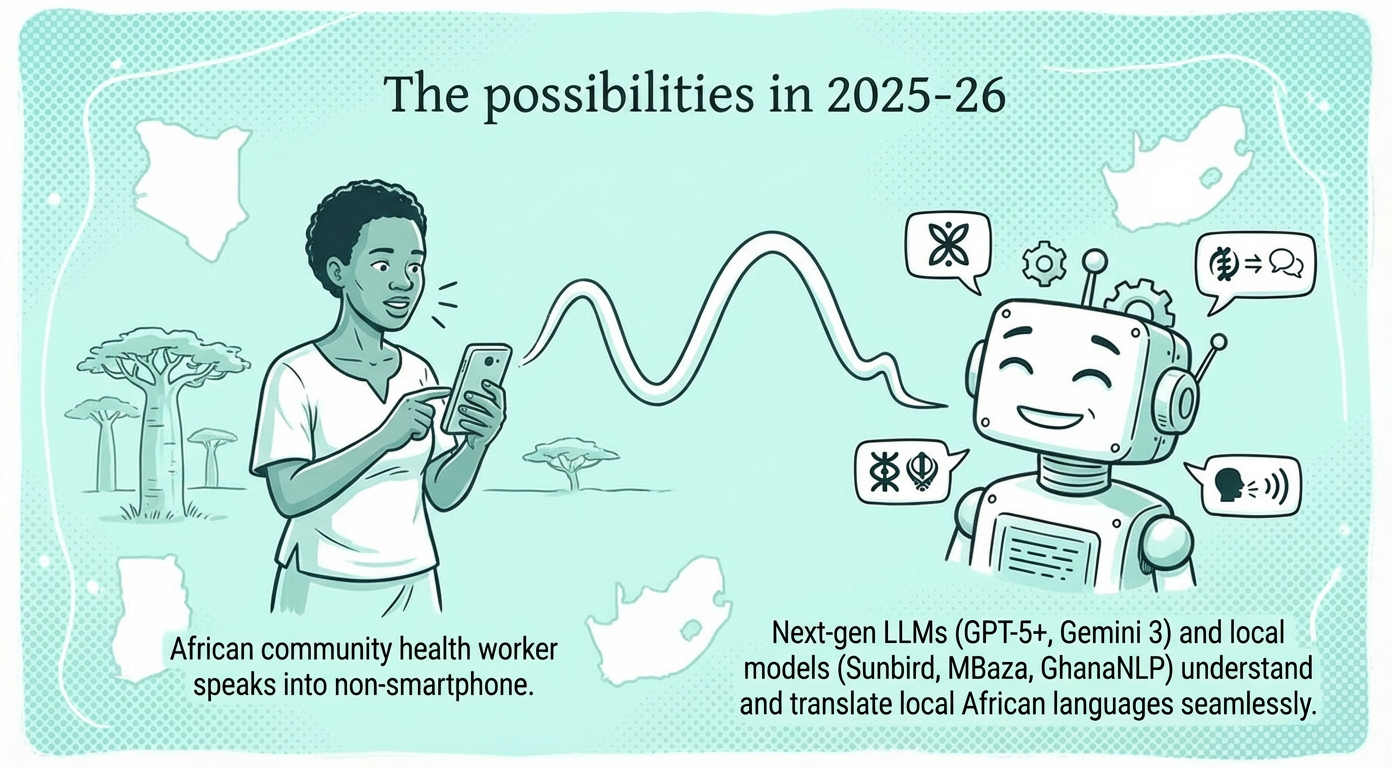
The possibilities in 2025
Local NLP and AI teams such as Jacaranda Health and MBaza released better performing fine-tuned African speech recognition models. Additionally, Meta released Omnilingual ASR with support for 1600+ languages.
New LLM generations (GPT-5+, Gemini 3) dramatically improved multilingual text comprehension of local-language text.
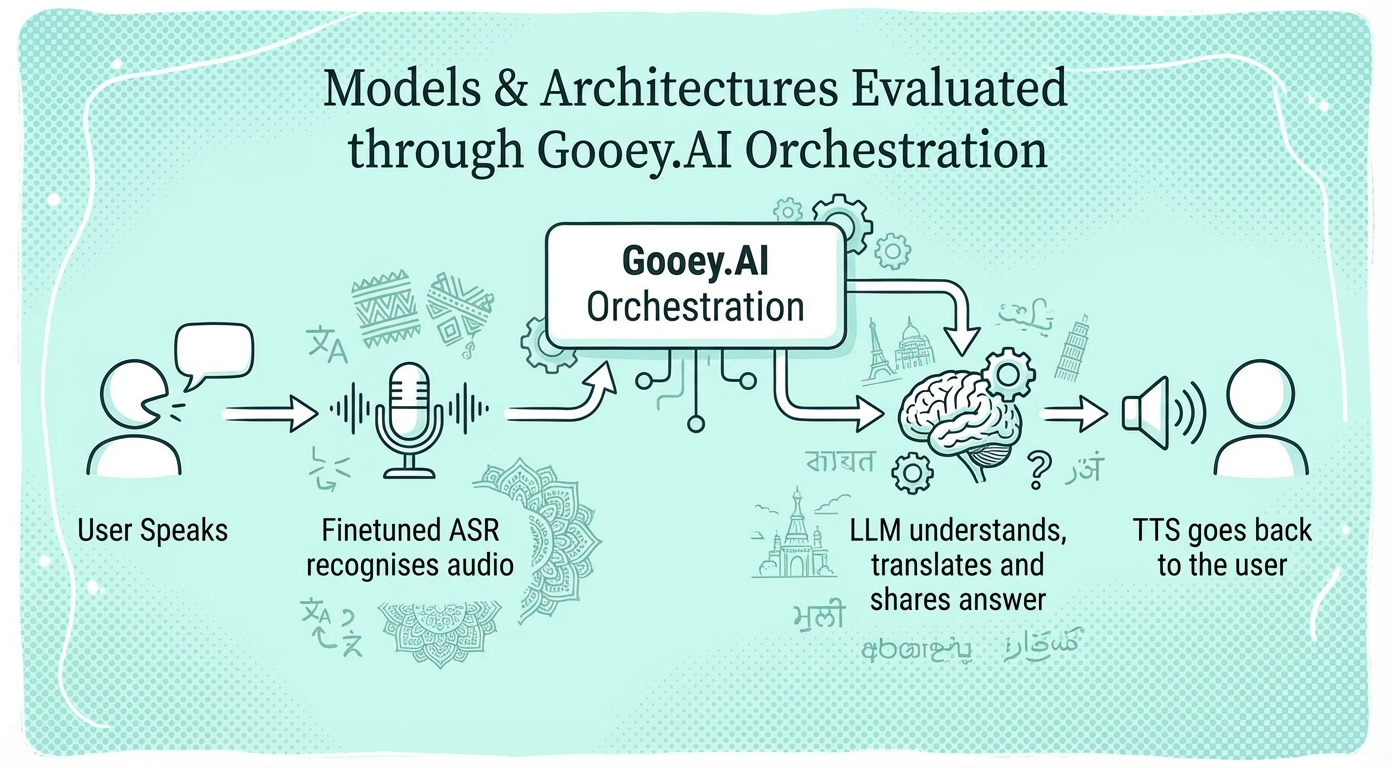
Model chains and Architectures
We use various Models & Architectures to create the evaluation process. This is very easily configurable with the help of Gooey.AI's Orchestration tech that allows us to quickly chain ASR -> LLM -> TTS or more.
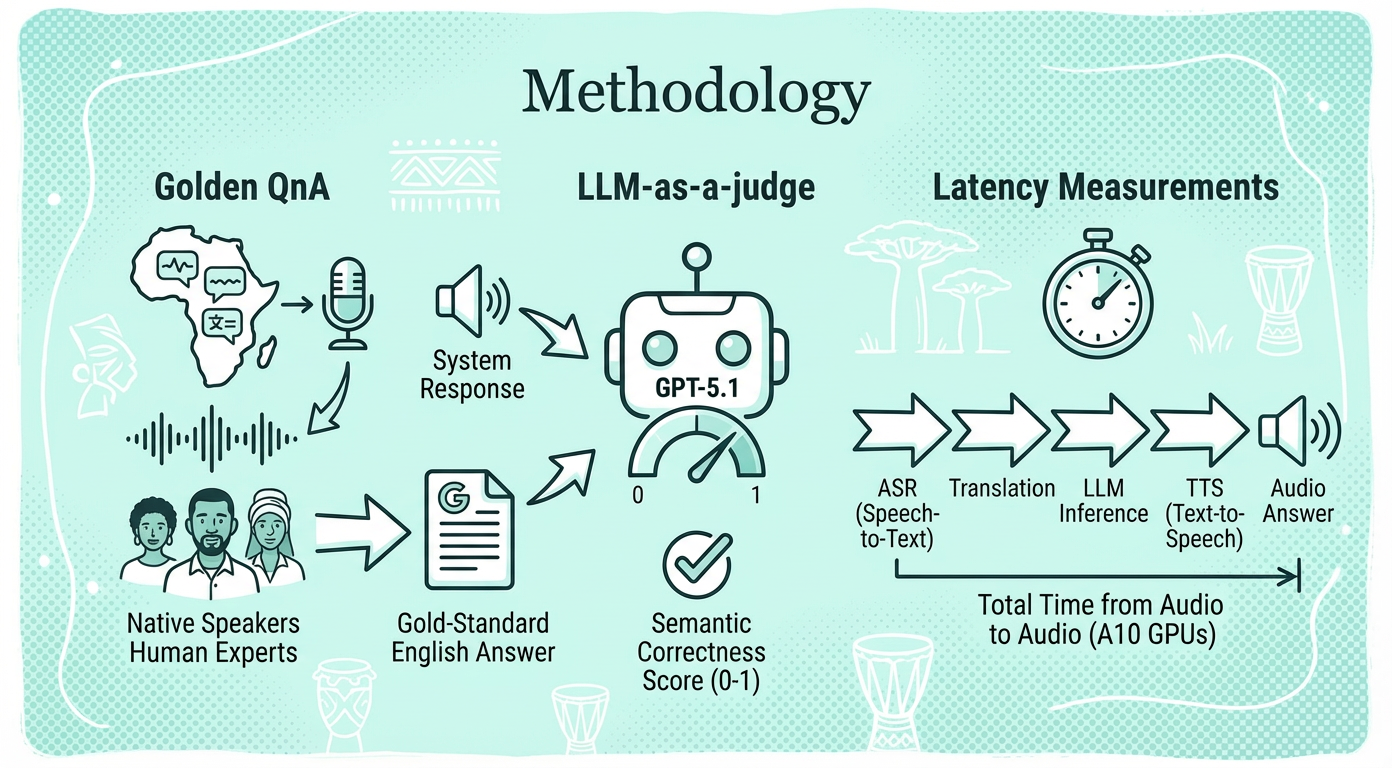
Our methodology
Golden QnA
Native speakers record audio questions in three African languages; human experts provide gold-standard English answers for consistent evaluation across systems.
LLM-as-a-judge
GPT-5.1 scores system responses against expert answers on 0-1 scale, measuring semantic correctness since African language evaluation remains unreliable.
Latency measurements
Measures total time from audio question to audio answer, including ASR, translation, LLM inference, and TTS on A10 GPUs.
 Key Findings
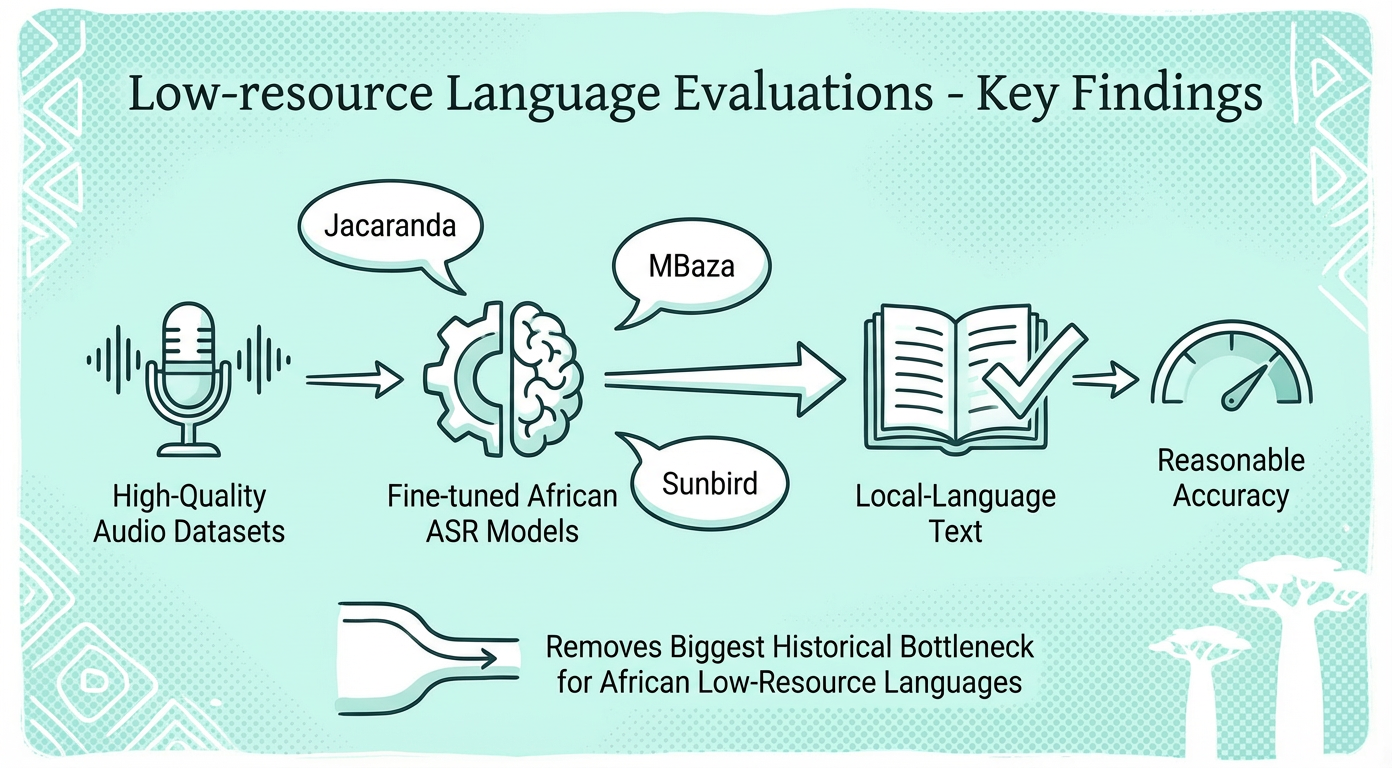
Breaking the audio barrier for African languages
Fine-tuned African ASR models—Jacaranda, MBaza, and Sunbird—trained on high-quality, diverse audio datasets, now reliably convert speech into local-language text with significantly improved accuracy. By addressing dialectal variation and acquiring local and region-specific finetuned training data, these models remove the biggest historical bottleneck for low-resource African languages, enabling scalable speech-to-text for research, civic tech, education, and voice interfaces across the continent and supporting inclusive digital access everywhere today.
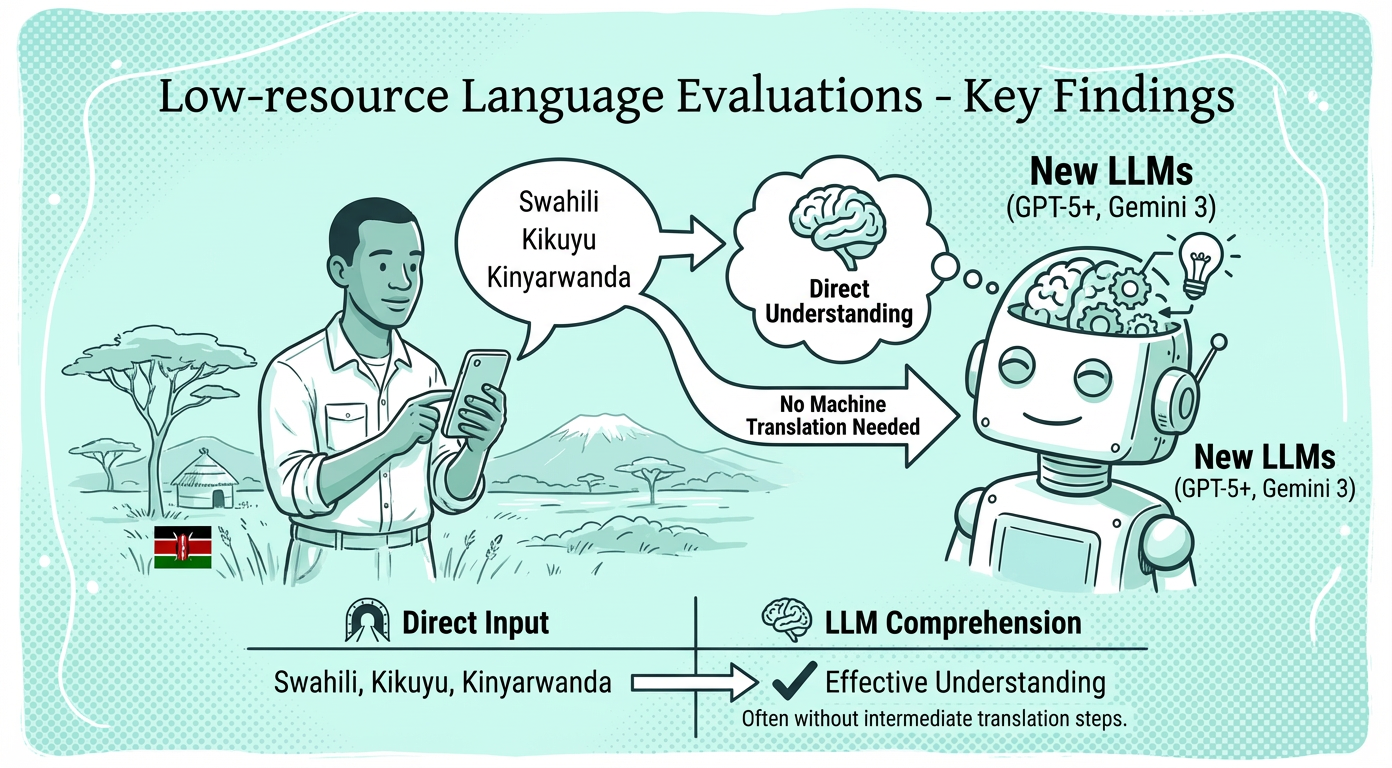
Native text understanding without translation layers
New large language models such as GPT-5+ and Gemini 3 can natively understand Swahili, Kikuyu, and Kinyarwanda text, often without requiring machine translation. Even in Q3 2025 these models required Machine Translations to understand and translate information to the LLMs. This update in LLMs improves downstream tasks like information retrieval, summarization, and question answering. Native comprehension reduces latency, translation errors, and developer overhead, enabling more accurate, accessible applications for local services, education, and other frontline work.
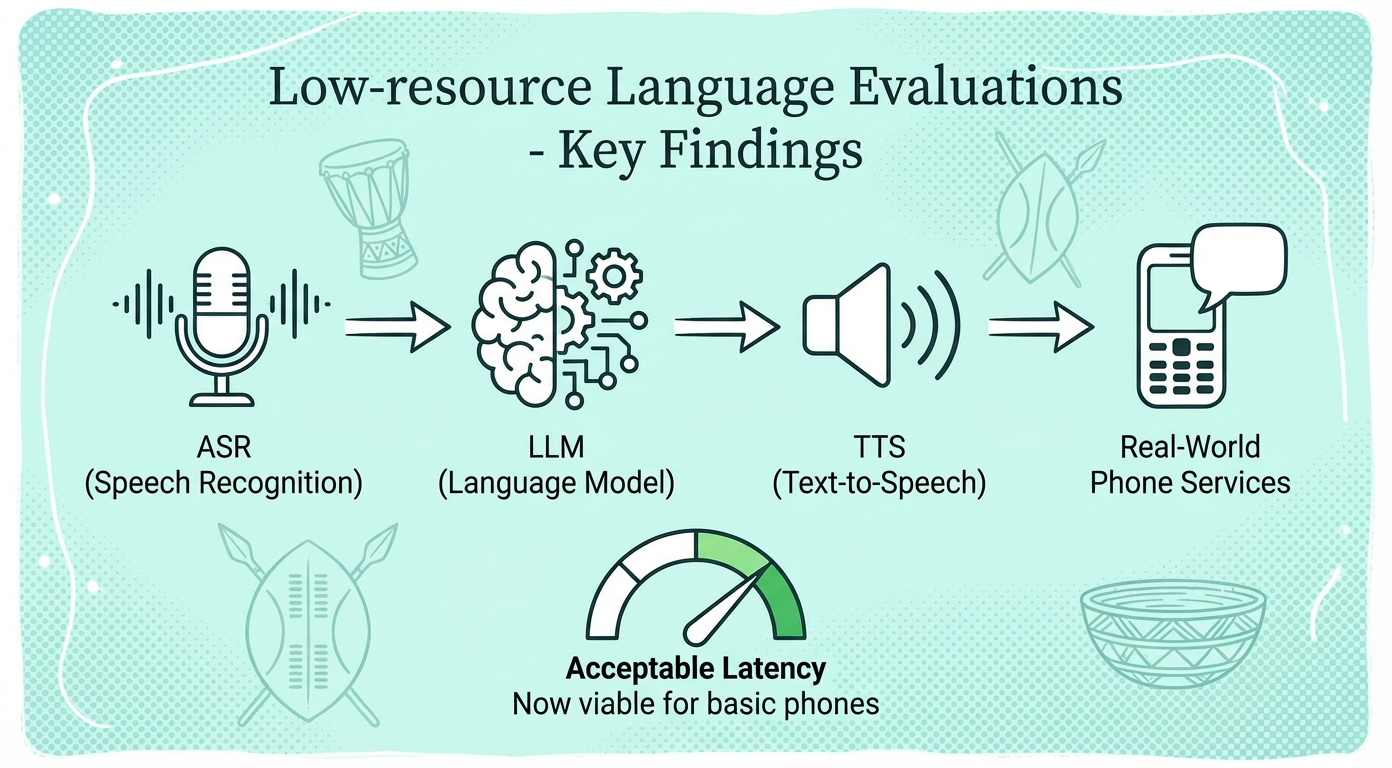
End-to-end voice AI ready for real-world use
ASR→LLM→TTS pipelines now deliver acceptable latency and robustness for phone-based voice services on basic feature phones and low-bandwidth networks. SIP via Livekit and other telephony improvements for AI models reduce latency significantly. These end-to-end systems enable automated call handling, IVR, and conversational agents across several African languages, making scalable, affordable voice services for healthcare, banking, government, and small businesses with deployable latency and cost profiles today.